
This guide will explain the options, what NSE and BSE options are and what differentiates them from each other.

In a move that could have implications for market share dynamics, the Securities and Exchange Board of India (Sebi) has permitted the National Stock Exchange (NSE) and the BSE to alter the days for settlement of equity derivatives contracts.

Shares of brokerage-related companies nosedived 18 per cent on Sunday after Finance Minister Nirmala Sitharaman proposed raising securities transaction tax on commodity futures to 0.05 per cent from 0.02 per cent in the Union Budget 2026-27.

The surge in the market price is also attributed to demand by retail and high-networth individual investors ahead of the IPO.

Finance Minister Nirmala Sitharaman on Sunday announced an increase in the Securities Transaction Tax (STT) on Futures and Options trade with a view to discouraging small investors from speculative trading in derivatives, which led to a sharp decline in the stock market.

Benchmark stock indices Sensex and Nifty dived sharply by nearly 2 per cent on Sunday after Finance Minister Nirmala Sitharaman proposed a hike in the Securities Transaction Tax (STT) on derivatives. Reversing the early gains, the 30-share BSE Sensex plunged sharply by 2,370.36 points or 2.88 per cent to slide below the 80,000-mark at 79,899.42 in afternoon trade as the finance minister announced a hike in STT on futures contracts to 0.05 per cent from the current 0.02 per cent.

Bourses ask for okay in the 'permitted to trade' category; brokers and legal experts speak in favour.

The average daily turnover (ADTV) in the derivatives market rose to a 12-month high in October, touching 506 trillion - up nearly 46 per cent since June - as volatility picked up and concerns over further regulatory tightening eased. Derivatives activity had slumped earlier this year after the Securities and Exchange Board of India (Sebi) capped weekly expiries to two days and discontinued weekly contracts on non-benchmark indices.

The Indian metal market is a promising sector to invest in as it provides a good balance between the prospects of growth and stability in dynamic economic conditions and a changing geopolitical environment. Metals such as gold, silver, copper, etc, have gained renewed significance in 2025, amidst growing inflation and India's push towards infrastructural growth and green energy initiatives.
The Indian metal market is a promising sector to invest in as it provides a good balance between the prospects of growth and stability in dynamic economic conditions and a changing geopolitical environment. Metals such as gold, silver, copper, etc, have gained renewed significance in 2025, amidst growing inflation and India's push towards infrastructural growth and green energy initiatives.

Co-location attracts institutional investors, which drives volumes for long-dated options, with higher realisations at lower costs.

Shares of BSE on Wednesday tumbled more than 9 per cent after its rival NSE said that all Nifty index weekly derivatives contracts will expire on Monday instead of Thursday with effect from April 4. The stock of BSE tanked 9.39 per cent to Rs 4,035.10 apiece on the National Stock Exchange (NSE).

A record amount of pension money may be finding its way into the stock market, if buying figures in the National Stock Exchange (NSE) data are any indication. Category inflows touched Rs 37,409 crore for the three months ending September 2025, shows an analysis of NSE data.

Leading stock exchanges BSE and NSE on Friday decided to drop Yes Bank from Futures and Options segment from May 29. The existing Futures and Options contracts across all expiries will expire on May 28.
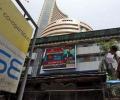
Rising outgo towards clearing and settlement fees has led to an altercation between the BSE and the National Stock Exchange of India (NSE), with the latter striking down the former's request to lower the charges. NSE said it has no plans to restructure the same and that it will continue with the pricing defined under the interoperability framework. The interoperability framework, introduced in 2019, allows trades executed on any of the exchanges to be settled or cleared at either of the two clearing corporations -- NSE Clearing (NCL) or Indian Clearing Corporation (ICCL), fully-owned by the NSE and the BSE, respectively.

The National Stock Exchange (NSE) will shift the expiry of Bank Nifty derivatives contracts from Thursday to Friday, after smaller rival BSE did so earlier. The change, effective July 7, will apply to both weekly and monthly futures and options (F&O) contracts of the widely traded banking sector index. The first Friday expiry will be on July 14, 2023. NSE dominates the derivatives segment.

BSE's fresh shot at cracking the derivatives market is off to a promising start. However, Asia's oldest bourse is facing resistance from brokerages with nearly 10 large brokers yet to offer the relaunched Sensex and Bankex derivatives on their platforms. Many brokers maintain that they are working on the back end to enable BSE derivatives on their apps and websites. Some said while volumes are picking up, they are still miniscule compared to bigger rival NSE, which is the most-preferred venue for derivatives trading. Only a few brokers responded to formal queries sent by Business Standard on the issue of allowing BSE derivatives on their platform.

'Market momentum and investor interest are at unprecedented levels, making this the opportune moment.'
Stocks of brokerages and market infrastructure institutions (MIIs) witnessed selling pressure after the Securities and Exchange Board of India's (Sebi's) crackdown on proprietary trading firm Jane Street. The weakness was attributed to concerns that debarment of the US firm - a prominent player in the futures and options (F&O) segment - will lead to a further decline in volumes, which are already down over 30 per cent from the peak.
BSE (formerly Bombay Stock Exchange) has seen its market share go past the critical 20 per cent mark in the derivatives segment, intensifying its battle with bigger rival - the National Stock Exchange (NSE) - which, less than a year ago, had a monopoly in this space. In April, the average daily trading volume (ADTV) for BSE stood at Rs 89 trillion, accounting for 20.6 per cent of the overall ADTV of Rs 432 trillion (based on notional volumes for options).
The BSE faces a larger outgo after regulatory clarity on the fee to be paid to the Securities and Exchange Board of India (Sebi) as a turnover charge on options volume. The market regulator on Friday directed the exchange to pay a regulatory fee on the 'notional value' of annual turnover.

The National Stock Exchange (NSE) on Tuesday said it has halved the lot size for trading derivatives contracts for the Nifty 50 index to 25 and also reduced the lot sizes of the Nifty Financial Services and Nifty Midcap indices as part of its periodic revision. "All contracts, i.e. weekly, monthly, quarterly, and half-yearly expires available for trading from the trade date of April 26, 2024, onwards will be with the revised market lot size," the NSE said, referring to applicability of the change for Nifty 50. The lot size in the derivatives segment refers to the fixed number of shares in a unit or group for which contracts are traded.

The share of Ahmedabad in the total value of trades on both the BSE and NSE is set to touch double digits for the third year in a row.
The BSE has decided to move the expiry day of Bankex derivatives contracts from Friday to Monday, effective October 16, the bourse said on Wednesday. "New contracts of S&P BSE Bankex with Monday expiry will be generated on October 13, 2023, and will be available for trading with effect from October 16, 2023," the BSE said, citing the decision was based on the market feedback. The expiry of Sensex derivatives contracts will continue to be on Friday.
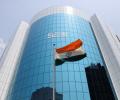
The Securities and Exchange Board of India's (Sebi's) six-step plan to curb retail participation in speculative index derivatives may lead to a substantial drop in volumes - potentially by 30-40 per cent. These measures aim to reduce excessive speculation in the futures and options (F&O) segment, where daily turnover often exceeds Rs 500 trillion and retail investors end up on the losing side of the trade more often. Sebi has decided to increase the contract size from Rs 5 lakh to Rs 15 lakh, raising margin requirements and mandating the upfront collection of option premiums from buyers.

While the BSE is holding a special trading session to test its disaster recovery software, NSE conduct a special live trading session in capital market segment and future options and SLB segments.

Sundararaman Ramamurthy has been an interesting choice for the publicly-listed BSE, which has seen its chief move to bigger rival -- the National Stock Exchange (NSE) -- in July. Having spent nearly two decades at the country's largest bourse, Ramamurthy is among the early architects of NSE and understands all the cogs of the exchange wheel like only a few others in the country. Just like NSE's core team, which includes its founder RH Patil, the 59-year-old Ramamurthy has worked at the Industrial Development Bank of India (IDBI) before moving to NSE in 1995.

Weak market sentiment has driven a steady decline in cash market volumes and margin trading books over the past nine months. Cash market volumes have plummeted by 45 per cent from their peak in June 2024, while the margin book - used by traders to leverage stock purchases - has shrunk by 16 per cent since its high in September 2024.

'It is like a chicken-and-egg situation.' 'All these product tweaks are innovative, but traders won't move unless there is liquidity.' 'And liquidity cannot be generated until traders move.'

While MCX-SX is still waiting for regulatory approval to host equity trading, BSE has been struggling to maintain its 30 per cent market share in the cash segment.

Co-location may well have a majority share of futures and options (F&O) trading in 2023-24 once again. It accounted for 50.53 per cent of the National Stock Exchange (NSE) derivatives trading turnover in February, higher than the 50.1 per cent share seen in 2022-23 (FY23). The share on the BSE was higher though February numbers showed a dip relative to the previous year.

Equity trading volumes, both in the cash and derivatives segments, dropped in March amid wild swings in stock prices. The average daily trading volume for the cash segment (National Stock Exchange, or NSE, and BSE combined) fell by 16.3 per cent to Rs 1.07 trillion - the lowest since November 2023. Market players said the drop could have been sharper if not for the large block deals in companies such as ITC, Tata Consultancy Services, and IndiGo seen during the month.

The largest stock bourse in the country, NSE on Wednesday said trading across segments came to a halt at 11.40 am due to connectivity issues.

Benchmark BSE Sensex declined for the fourth day in a row on Wednesday due to selling in financial and banking shares and the government's move to hike securities transaction tax and short term capital gains tax. The 30-share BSE Sensex declined 280.16 points or 0.35 per cent to settle at 80,148.88 with 19 of its components closing lower and 11 with gains. During the day, it tumbled 678.53 points or 0.84 per cent to 79,750.51.

The exchange cited issues with its telecom service providers that prevented stocks and index quotations from getting updated.

Aditya Puri has a higher yearly pay of 9.7 crore, plus stock options, at HDFC Bank.

Among the new entries, the largest by market capitalisation are LIC, Avenue Supermarts (DMart), Adani Green Energy, Zomato and Jio Financial Services.

Leading brokerages have revised their charges with the true-to-label norms by the Securities and Exchange Board of India (Sebi) kicking in from Tuesday.

Adani Ports, NTPC, Infosys, Hindustan Unilever, HCL Technologies and Sun Pharma were among the other big gainers. However, Larsen & Toubro, Bajaj Finance, State Bank of India, Axis Bank and HDFC Bank were amonh the major laggards.
Among the Sensex firms, Kotak Bank, PowerGrid, ICICI Bank, HDFC Bank, PowerGrid were the major gainers. HUL, TCS, M&M, IndusInd Bank, HCL Tech were among the losers.
 © 2026 Rediff.com - Investor Information - Advertise with us - Disclaimer - Privacy Policy - Sitemap - Feedback - About us - Terms of use - Grievances